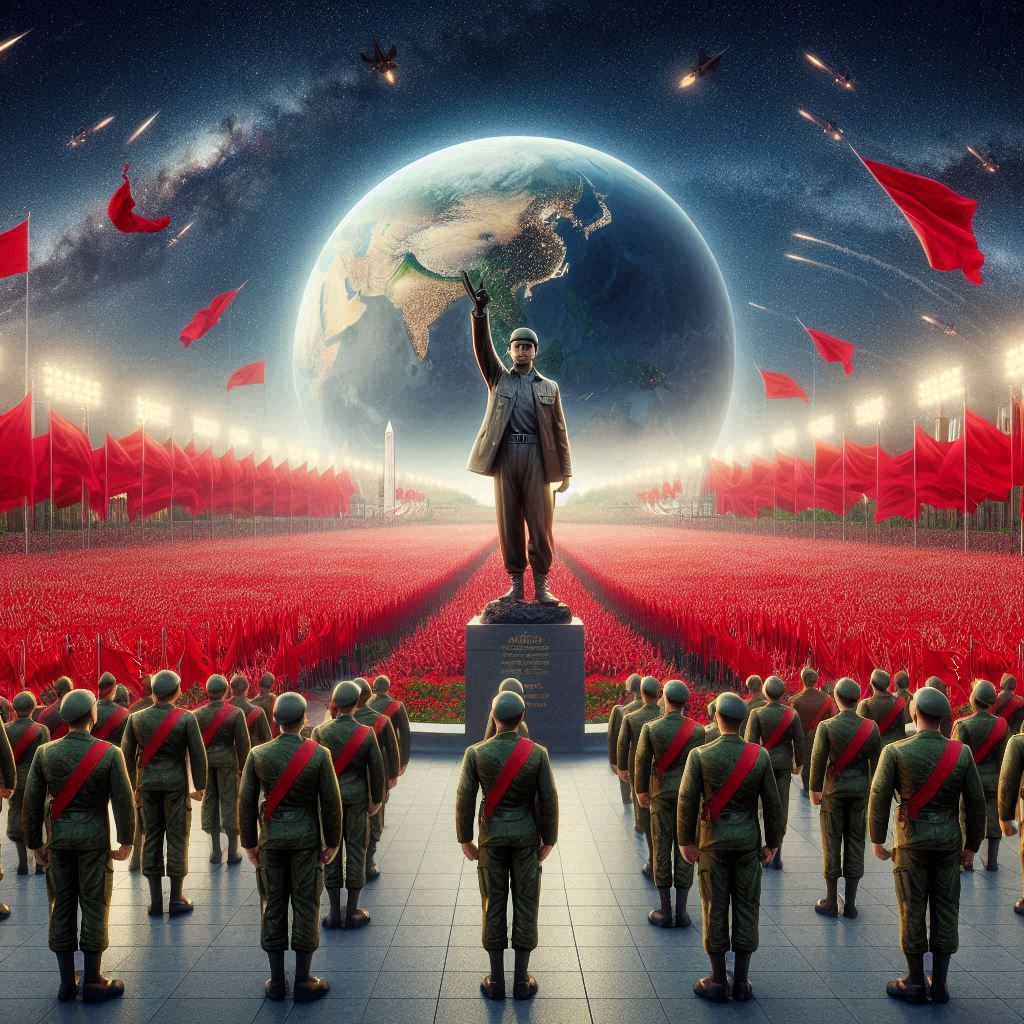
Socialist Hungary Military Cadet Training Guide
Introduction
Welcome to the People’s Army of Socialist Hungary. As a cadet, you are the future of our proud and powerful nation. Your training will be rigorous, demanding both physical endurance and intellectual prowess, as well as an unwavering commitment to our socialist ideals. This guide outlines the key components of your training program.
Section 1: Political Education
1.1 Marxist-Leninist Theory
- Introduction to Marxism-Leninism:
- Core Principles: Study of the foundational texts by Karl Marx, Friedrich Engels, and Vladimir Lenin.
- Class Struggle: Understanding the role of the proletariat and the bourgeoisie, and the inevitability of revolution.
- Dictatorship of the Proletariat: Role of the state in transitioning from capitalism to socialism.
- Historical Materialism:
- Stages of Development: From primitive communism to feudalism, capitalism, and socialism.
- Economic Base and Superstructure: How economic conditions shape society’s institutions and ideologies.
- Application to Modern Society: Analysis of contemporary class relations and the path to socialism.
- Dialectical Materialism:
- Dialectics: Study of contradictions and their resolution in nature and society.
- Materialism: Understanding the material basis of all phenomena.
- Application in Science: Using dialectical materialism to analyze scientific advancements and technological progress.
- Revolutionary History:
- October Revolution: Detailed study of the events of 1917 in Russia, strategies, and key figures.
- Hungarian Soviet Republic: Analysis of the 1919 revolution, its successes, failures, and lessons.
- Global Revolutionary Movements: Examination of other socialist revolutions and liberation movements worldwide.
1.2 Socialist Patriotism
- National Identity:
- Cultural Heritage: Importance of Hungarian culture and its role in building socialism.
- Heroes of Socialism: Study of key figures in Hungarian and international socialist movements.
- Role of the Military:
- Defender of the People: Emphasizing the army’s role in protecting the working class and socialist achievements.
- Military and Civil Society: Building strong relations between the military and civilian population.
Section 2: Physical Training
2.1 Basic Physical Fitness
- Cardiovascular Training:
- Running Programs: Structured running schedules for endurance and speed.
- Swimming Drills: Techniques and endurance training in various water conditions.
- Cycling Routes: Endurance cycling and high-intensity interval training.
- Strength Training:
- Weightlifting: Focused on compound movements like squats, deadlifts, and bench presses.
- Bodyweight Exercises: Push-ups, pull-ups, burpees, and other calisthenics.
- Circuit Training: Combining strength and cardio for overall fitness.
- Flexibility:
- Stretching Routines: Dynamic and static stretches for all major muscle groups.
- Yoga: Incorporation of yoga for flexibility, balance, and mental focus.
- Injury Prevention: Techniques to avoid common training injuries.
2.2 Combat Training
- Hand-to-Hand Combat:
- Judo Techniques: Throws, holds, and grappling.
- Wrestling: Takedowns, pins, and submission techniques.
- Self-Defense: Situational awareness and defense against armed and unarmed attacks.
- Weapon Training:
- Firearms Proficiency: Detailed training on pistols, rifles, and machine guns.
- Marksmanship: Techniques for accuracy, including breathing and trigger control.
- Advanced Weapons: Use of grenades, mortars, and anti-tank weaponry.
- Field Exercises:
- Simulated Combat: Realistic scenarios in urban, rural, and forest environments.
- Small Unit Tactics: Coordination and communication within squads and platoons.
- Survival Skills: Wilderness survival, including shelter building, navigation, and foraging.
Section 3: Academic Education
3.1 Military Science
- Strategy and Tactics:
- Historical Battles: Study of famous battles and campaigns.
- Modern Warfare: Understanding contemporary military tactics and technology.
- Wargaming: Simulations and strategic games to apply theoretical knowledge.
- Engineering:
- Field Fortifications: Construction of trenches, bunkers, and defensive positions.
- Demolitions: Safe handling and use of explosives for demolition and sabotage.
- Bridges and Roads: Building and maintaining critical infrastructure.
- Logistics:
- Supply Chains: Managing the flow of supplies and equipment.
- Resource Management: Efficient use of resources in peacetime and conflict.
- Transportation: Coordinating the movement of troops and material.
3.2 General Education
- Mathematics and Physics:
- Advanced Mathematics: Calculus, statistics, and their military applications.
- Physics: Mechanics, ballistics, and material science relevant to military operations.
- Problem-Solving: Developing analytical thinking through complex problems.
- History and Geography:
- World History: Emphasis on revolutions, wars, and the development of socialism.
- Geopolitics: Understanding the strategic importance of different regions.
- Topography: Reading and creating detailed maps for tactical planning.
Section 4: Leadership and Discipline
4.1 Leadership Training
- Command Techniques:
- Leadership Styles: Various approaches to command and their applications.
- Team Building: Fostering unity and cooperation within units.
- Mentorship: Developing junior cadets and fostering a culture of continuous learning.
- Decision-Making:
- Critical Thinking: Analyzing situations and making informed decisions.
- Stress Management: Performing under pressure and maintaining composure.
- Scenario Planning: Preparing for multiple contingencies and outcomes.
- Communication:
- Effective Communication: Clear and concise verbal and written communication.
- Public Speaking: Techniques for addressing groups confidently.
- Radio and Signal Training: Using communication equipment efficiently.
4.2 Discipline and Ethics
- Code of Conduct:
- Ethical Standards: Upholding the principles of honesty, integrity, and loyalty.
- Disciplinary Procedures: Understanding and adhering to military regulations.
- Role of Discipline: Importance of discipline in maintaining order and effectiveness.
- Discipline Drills:
- Daily Routines: Structured schedules for maintaining discipline.
- Parade Drills: Precision in movement and formation.
- Inspection: Regular inspections to ensure standards are met.
- Comradeship:
- Unit Cohesion: Building strong bonds within the unit.
- Mutual Support: Encouraging a culture of helping and supporting comrades.
- Team Exercises: Group activities to strengthen trust and cooperation.
Section 5: Specialization Training
5.1 Specialized Units
- Airborne Training:
- Parachuting Techniques: Static line and free-fall parachuting.
- Air Assault Tactics: Coordinating airborne operations and assault techniques.
- Rapid Deployment: Techniques for quick mobilization and deployment.
- Armored Warfare:
- Tank Operation: Driving, operating, and maintaining tanks.
- Armored Tactics: Strategies for using armored units in various terrains.
- Anti-Tank Warfare: Techniques for countering enemy armor.
- Naval Training:
- Basic Seamanship: Navigation, ship handling, and maintenance.
- Naval Tactics: Strategies for naval engagements and coastal defense.
- Maritime Warfare: Understanding the principles of maritime operations.
5.2 Intelligence and Reconnaissance
- Surveillance Techniques:
- Observation: Techniques for effective observation and reporting.
- Recon Equipment: Use of binoculars, night vision, and other surveillance tools.
- Camouflage: Techniques for blending into various environments.
- Cryptography:
- Codebreaking: Basics of deciphering enemy communications.
- Secure Communication: Techniques for ensuring secure transmission of information.
- Encryption Methods: Understanding modern encryption technologies.
- Field Reconnaissance:
- Patrol Techniques: Conducting reconnaissance missions.
- Reporting: Accurate and timely reporting of gathered intelligence.
- Survival Skills: Techniques for long-term operations behind enemy lines.
Conclusion
Your training as a cadet in the People’s Army of Socialist Hungary is designed to develop you into a disciplined, knowledgeable, and physically fit soldier, deeply committed to our socialist principles. The combination of political education, physical training, academic learning, and specialized skills will prepare you to serve and protect our nation effectively. Remember, the strength of our army lies in the unity and dedication of its soldiers. Embrace this journey with determination and pride. Forward to victory!


 INTEL KARTEL
Hozzászólás