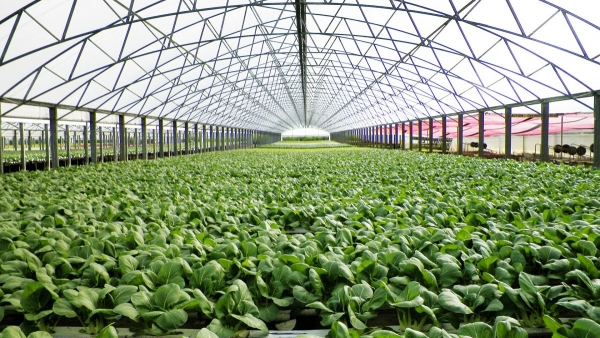
Creating a detailed business plan for building Netherland-style closed environment greenhouse farms with a budget of $3.2 billion involves several key components: cost estimation, capacity calculation, and project planning. I’ll break it down into a structured outline with detailed considerations.
1. Executive Summary
- Objective: To utilize $3.2 billion to establish closed environment greenhouse farms based on Dutch agricultural technology.
- Target Outcome: Maximize production efficiency and sustainability, increase food security, and achieve a profitable return on investment.
2. Market Analysis
- Demand Assessment: Evaluate the demand for high-efficiency greenhouse-grown produce in target regions.
- Competitive Landscape: Analyze existing competitors and market trends in greenhouse agriculture.
- Regulatory Environment: Understand regulations and incentives related to greenhouse farming in different regions.
3. Greenhouse Design and Technology
- Dutch-Style Greenhouse Features:
- Climate Control: Advanced HVAC systems, humidity control, and CO2 enrichment.
- Lighting: High-efficiency LED lighting systems.
- Water Management: Hydroponic or aeroponic systems, rainwater harvesting.
- Automation: Robotics for planting, maintenance, and harvesting.
4. Cost Breakdown
- Construction Costs:
- Greenhouse Structures: $30 million to $50 million per facility.
- Climate Control Systems: $5 million to $10 million.
- Lighting Systems: $3 million to $7 million.
- Water Management Systems: $2 million to $5 million.
- Automation and Robotics: $10 million to $20 million.
- Operational Costs:
- Labor: $1 million to $3 million annually per facility.
- Maintenance: $2 million to $5 million annually.
- Utilities: $3 million to $6 million annually.
- Total Cost per Facility: Approximately $50 million to $100 million.
5. Capacity Calculation
- Facility Size:
- Typical Size: 10 to 20 acres per facility.
- Production Capacity: 20 to 50 metric tons of produce per acre annually.
- Number of Facilities:
- Total Budget: $3.2 billion.
- Cost per Facility: $50 million to $100 million.
- Number of Facilities: 32 to 64.
6. Project Phases
- Phase 1: Planning and Design (6-12 months):
- Secure permits and approvals.
- Design facility layouts and select technology vendors.
- Phase 2: Construction (12-24 months per facility):
- Groundbreaking and infrastructure development.
- Erection of greenhouse structures and installation of systems.
- Phase 3: Operational Setup (6 months):
- Staff hiring and training.
- Test runs and system optimization.
- Phase 4: Full Operation and Scaling (Ongoing):
- Begin full-scale production.
- Evaluate performance and scalability.
7. Revenue Model
- Product Pricing: Set competitive prices based on market demand.
- Sales Channels: Direct to consumers, grocery chains, restaurants.
- Profit Margins: Estimate based on production costs and market prices.
8. Risk Management
- Technical Risks: Mitigate through thorough testing and reliable technology.
- Market Risks: Diversify produce types and markets.
- Financial Risks: Maintain contingency funds and secure insurance.
9. Sustainability and Social Impact
- Environmental Impact: Focus on energy efficiency, water conservation, and reduced carbon footprint.
- Community Benefits: Job creation and local economic growth.
10. Financial Projections
- Initial Investment: $3.2 billion.
- Projected Revenue: Estimate based on facility output and market prices.
- Return on Investment: Analyze over a 5-10 year period.
11. Conclusion
- Summary: With a $3.2 billion budget, you can establish 32 to 64 state-of-the-art closed environment greenhouse farms, significantly contributing to sustainable agriculture and market supply.
This outline provides a high-level overview, and detailed financial modeling, market research, and strategic planning would be necessary for a comprehensive business plan.
To provide a full output analysis for establishing 32 Netherland-style closed environment greenhouse farms with a $3.2 billion budget, we will detail the costs, capacity, revenue, and financial projections. This comprehensive approach will help in understanding the overall feasibility and potential returns of the investment.
1. Project Overview
- Number of Farms: 32
- Total Budget: $3.2 billion
- Average Cost per Farm: Approximately $100 million
2. Detailed Cost Breakdown
A. Construction Costs
- Greenhouse Structures: $50 million per farm
- Total: 32 farms x $50 million = $1.6 billion
- Climate Control Systems: $8 million per farm
- Total: 32 farms x $8 million = $256 million
- Lighting Systems: $5 million per farm
- Total: 32 farms x $5 million = $160 million
- Water Management Systems: $3 million per farm
- Total: 32 farms x $3 million = $96 million
- Automation and Robotics: $15 million per farm
- Total: 32 farms x $15 million = $480 million
- Other Construction Costs (Site preparation, roads, utilities): $5 million per farm
- Total: 32 farms x $5 million = $160 million
Total Construction Costs: $1.6 billion (structures) + $256 million (climate control) + $160 million (lighting) + $96 million (water management) + $480 million (automation) + $160 million (other) = $2.792 billion
B. Operational Costs
- Labor: $2 million annually per farm
- Total: 32 farms x $2 million = $64 million annually
- Maintenance: $3 million annually per farm
- Total: 32 farms x $3 million = $96 million annually
- Utilities: $4 million annually per farm
- Total: 32 farms x $4 million = $128 million annually
Total Annual Operational Costs: $64 million (labor) + $96 million (maintenance) + $128 million (utilities) = $288 million
3. Production Capacity
A. Facility Size and Yield
- Average Facility Size: 15 acres
- Production Yield: 40 metric tons per acre annually
Total Production per Farm: 15 acres x 40 metric tons = 600 metric tons annually
Total Production for 32 Farms: 32 farms x 600 metric tons = 19,200 metric tons annually
B. Crop Varieties and Revenue Potential
- Primary Crops: Lettuce, tomatoes, cucumbers, herbs.
- Average Market Price: $3 per kilogram
Annual Revenue per Farm: 600 metric tons x $3,000 per metric ton = $1.8 million
Total Annual Revenue for 32 Farms: 32 farms x $1.8 million = $57.6 million
4. Financial Projections
A. Initial Investment
- Total Capital Expenditure: $2.792 billion
- Reserve for Contingencies and Working Capital: $3.2 billion – $2.792 billion = $408 million
B. Revenue and Profitability
- Annual Revenue: $57.6 million
- Annual Operational Costs: $288 million
- Net Annual Operating Loss: $57.6 million – $288 million = -$230.4 million
C. Break-Even Analysis
- Capital Recovery: With an initial loss, break-even will depend on scaling up production, improving operational efficiencies, and/or increasing market prices.
5. Strategic Considerations
A. Market Expansion
- Explore New Markets: Export opportunities or new domestic markets.
- Product Diversification: Grow high-value crops or specialty produce.
B. Operational Efficiency
- Technological Upgrades: Invest in further automation to reduce labor costs.
- Energy Efficiency: Implement renewable energy sources to cut utility costs.
C. Risk Management
- Supply Chain Disruptions: Develop relationships with multiple suppliers.
- Market Fluctuations: Create flexible pricing strategies and diversify crops.
6. Sustainability and Impact
- Environmental Benefits: Reduced water usage, lower carbon footprint, and local food production.
- Community Impact: Job creation and economic development in local areas.
7. Conclusion
Building 32 high-tech closed environment greenhouse farms with a $3.2 billion budget is feasible with an initial focus on construction and setup. The projected capacity is 19,200 metric tons of produce annually. Initial financial projections show a net loss, but with strategic market expansion, efficiency improvements, and diversification, the venture can move towards profitability and long-term sustainability.
For detailed financial modeling and strategic planning, professional financial analysts and industry experts should be consulted.


 INTEL KARTEL
Hozzászólás