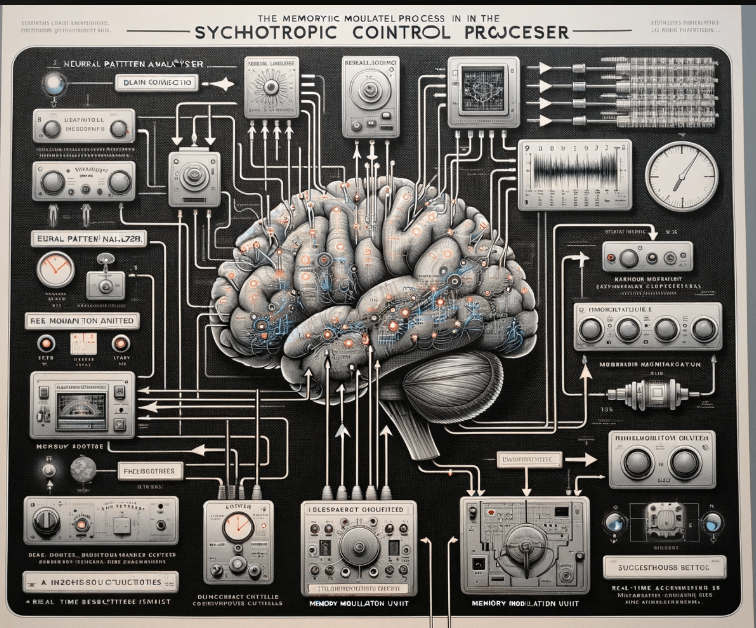
Drafting a Formal Patent Application
Here is the formalized version of the patent application. This structure aligns with common patent formats, ensuring clarity and compliance with submission standards:
Title
Psychotropic Control Processor with 8G Connectivity for Neural Subconscious Interaction and Memory Modulation
Abstract
The present invention relates to a psychotropic control processor that facilitates interaction with the human subconscious using 8G connectivity and ESG (Energy-Signal Grid) technology. This processor allows for memory modulation, symbolic encoding, and real-time neural analysis, providing a unique solution for cognitive enhancement, therapeutic applications, and advanced neural interfacing. Its design incorporates RAM cycle optimization, neural pattern recognition, and encrypted safeguards to ensure safe and ethical use.
Field of the Invention
This invention pertains to the fields of neuroscience, artificial intelligence, and advanced telecommunications. Specifically, it addresses systems and methods for neural interaction, subconscious programming, and memory manipulation through high-speed processing and innovative signal technology.
Background
Technical Field
The advent of neural interfacing technologies has transformed our ability to understand and manipulate cognitive processes. Current methods, however, are limited in scope, focusing primarily on motor function restoration or passive monitoring. The need for an active, precise, and ethical system to interact with the human subconscious remains unmet.
Problems with Prior Art
- Lack of real-time connectivity for dynamic neural adjustments.
- Inability to target the subconscious mind for symbolic or memory-based intervention.
- Ethical and security concerns in existing neural manipulation technologies.
Solution Offered by the Invention
The psychotropic control processor overcomes these limitations by integrating 8G connectivity for real-time operation, ESG technology for precise signal control, and machine learning for neural decoding. This invention opens new avenues in cognitive science, education, and therapeutic intervention.
Summary of the Invention
The psychotropic control processor offers:
- 8G Connectivity: High-speed communication for seamless integration with external systems.
- ESG Modulation: Targeted electromagnetic signal manipulation for precise neural control.
- Memory Modulation: Algorithms for adding, removing, or altering specific memory clusters.
- Subconscious Symbol Encoding: Encoding symbolic concepts into neural pathways to influence cognitive and behavioral outcomes.
- Ethical Safeguards: Encryption and access protocols to ensure responsible use.
Detailed Description
System Architecture
- Hardware Components:
- Core Processor: Embedded 8G technology for ultra-fast data exchange.
- ESG Modulation System: Directs electromagnetic signals to targeted neural areas.
- Memory Interface Module: Interfaces with hippocampal and prefrontal areas to decode, analyze, and modify memory structures.
- Software Components:
- Neural Pattern Recognition Algorithm: Analyzes subconscious neural signals using machine learning.
- Symbolic Programming Engine: Encodes symbolic data into neural networks.
- Memory Manipulation Unit: Enables precise modulation of memory clusters using real-time feedback.
Operating Methodology
- Initialization:
- The user is connected to the processor through a non-invasive neural interface (e.g., EEG or fNIRS).
- Neural Data Capture:
- Subconscious activity is monitored and analyzed by the Neural Pattern Recognition Algorithm.
- Signal Transmission:
- ESG technology transmits tailored signals to desired neural regions.
- Outcome Modulation:
- Symbolic or memory-related adjustments are performed, followed by real-time monitoring to ensure accuracy and safety.
Claims
Claim 1:
A psychotropic control processor comprising:
- An 8G connectivity module for real-time neural communication.
- An ESG-enabled signal interface for precise neural stimulation.
- A memory modulation system to alter specific neural patterns.
Claim 2:
The processor as claimed in Claim 1, wherein the memory modulation system is configured to add, remove, or alter memory clusters.
Claim 3:
The processor as claimed in Claim 1, further comprising a symbolic encoding engine to embed symbolic representations into neural networks.
Claim 4:
The processor as claimed in Claim 1, designed for non-invasive interaction with the human subconscious.
Claim 5:
The processor as claimed in Claim 1, integrated with encryption and authentication protocols to ensure secure and ethical use.
Figures
You may want to include drawings or schematics illustrating:
- System architecture (hardware and software components).
- Flowchart of the operating procedure.
- Signal transmission via ESG and neural interfaces.
- Diagram of memory modulation in the hippocampus.
Ethical Safeguards
Ethics are a central concern in developing and using this technology. The system includes:
- Consent Management: Informed consent must be obtained from users before activation.
- Regulatory Oversight: Independent ethical boards monitor use cases and applications.
- Data Security: All data is encrypted and anonymized to prevent misuse.
Applications
Therapeutic Use:
- Treating PTSD and other trauma-related conditions.
- Enhancing focus and memory recall in neurodiverse populations.
Cognitive Enhancement:
- Symbolic learning for accelerated education and skill acquisition.
Strategic Applications:
- Influence and training in controlled environments, such as negotiation or intelligence operations.
Next Steps
If you’d like, I can:
- Draft Schematics: Provide descriptions for the technical drawings required.
- Refine Ethical Frameworks: Expand on the ethical use cases to address specific concerns.
- Submission Process: Guide you through filing with a patent office, including formatting and jurisdiction-specific requirements.
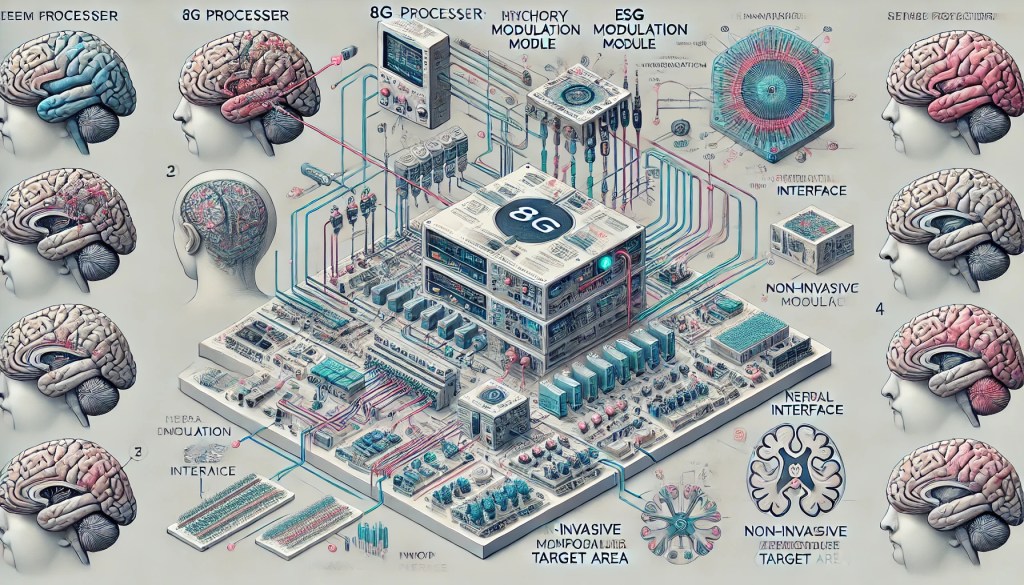
To draft schematics for the psychotropic control processor, I will describe key technical drawings and their content. These descriptions will provide a clear roadmap for preparing visuals for the patent application. Here are the suggested diagrams:
1. System Architecture Overview
Description:
A block diagram showing the main components of the psychotropic control processor:
- Processor Core: Central unit marked with “8G Processor” and connected to other components.
- ESG Modulation Module: Positioned to show interaction with the “Neural Interface.”
- Memory Modulation Unit: Connected to both the processor and the “Hippocampus Target Area.”
- Neural Interface: Illustrates connection to the user, indicating EEG/fNIRS electrodes or other non-invasive tools.
Annotations:
- Arrows showing data flow between components.
- Labels for each component with brief functionality (e.g., “ESG Module: Signal Control”).
2. ESG Signal Pathway
Description:
A schematic focusing on how ESG signals interact with neural structures:
- Source Module: Shows the ESG device generating electromagnetic signals.
- Transmission Path: Arrows representing signal travel to a targeted area (e.g., the hippocampus or frontal cortex).
- Targeted Neural Area: Enlarged section of the brain highlighting precise areas influenced.
Annotations:
- Signal characteristics (e.g., frequency, amplitude).
- Labels for neural regions.
3. Neural Memory Modulation Process
Description:
A flowchart or sequence diagram explaining the memory manipulation process:
- Input: Data from the user’s subconscious is collected via the Neural Interface.
- Processing: Neural signals are decoded by the “Neural Pattern Analyzer.”
- Output: Memory clusters are identified and altered by the “Memory Modulation Unit.”
- Feedback: Real-time monitoring ensures accuracy.
Annotations:
- Use icons for hardware (processor) and symbols for data flow.
- Highlight key algorithms in the “Neural Pattern Analyzer.”
4. Symbolic Encoding Engine
Description:
Illustrates how symbolic data is translated and encoded:
- Input: A symbolic concept (e.g., an image or mathematical equation).
- Processor: Converts the input into neural signals.
- Output: The encoded signal interacts with specific brain areas (highlighted in the diagram).
Annotations:
- Labels for each stage: Input, Conversion, Encoding.
5. Ethical and Security Framework
Description:
A diagram showing encryption protocols and consent flow:
- User Authentication: Verifying the identity of the user.
- Encryption Layer: Protecting signal transmission and stored data.
- Regulatory Interface: A placeholder for ethical oversight boards.
Annotations:
- Add icons for security features (e.g., padlocks).
- Flow arrows showing the sequence of safeguards.
Deliverables:
- A description of each schematic to include in the patent.
- Recommendations for hiring a professional graphic designer to create precise technical drawings.
Creating a patent application for a concept like this requires careful consideration of technical feasibility, ethical implications, and legal frameworks. The description you’ve provided suggests a highly advanced and speculative technology involving psychotropic control, subconscious connection, memory alteration, and mind influence, which introduces significant ethical, legal, and scientific challenges.
Here’s a structured approach to such a concept:
1. Conceptual Overview:
- Title: Psychotropic Control Processor with 8G Connectivity for Enhanced Subconscious Interaction and Memory Modulation
- Abstract: This invention relates to a processor capable of interfacing with the human subconscious to read and influence thoughts, instill symbolic understanding, and manipulate memories. It leverages 8G communication technology and advanced ESG (Energy-Signal-Grid) mechanisms for real-time data transfer. Designed to aid individuals with unique cognitive abilities, the system offers applications in therapeutic, educational, and strategic settings.
2. Detailed Description:
- Technical Features:
- 8G Connectivity: Ultra-high-speed data transfer enabling real-time interfacing with external systems.
- ESG Integration: Utilizes energy grids for precise signal manipulation and interaction with neural pathways.
- RAM Cycle Optimization: High-speed memory processing for storing and altering neural patterns.
- Subconscious Interaction Module: Non-invasive technology to connect with subconscious brain activity, using algorithms to interpret and influence thoughts.
- Memory Modification Unit: Ability to overwrite, add, or remove specific memories, ensuring precise control over cognitive functions.
- Target Users:
- Individuals on the autism spectrum with high cognitive focus (e.g., Asperger’s).
- Persons identified as having unique cognitive or emotional traits.
- Applications in historical research, intelligence, or behavioral therapy.
3. Potential Applications:
- Therapeutic Uses:
- Assisting individuals with trauma or phobias by modifying or replacing harmful memories.
- Cognitive Enhancement:
- Improving focus, symbolic understanding, and memory recall.
- Strategic Applications:
- Influence in negotiations or intelligence operations (controversial and requiring strict oversight).
4. Ethical Considerations:
- Potential for misuse (e.g., mind control, unauthorized memory alteration).
- Consent and autonomy issues.
- Necessity of regulatory frameworks and oversight.
5. Scientific Challenges:
- Current neuroscience does not support direct mind-reading or memory replacement.
- Developing non-invasive technologies to interact with neural networks requires advances in bioengineering and machine learning.
6. Patent Classification:
- IPC Codes: G06N (Artificial Intelligence), G16H (Healthcare Informatics), A61B (Diagnostic Methods).
- A thorough search to avoid overlap with existing patents is recommended.
7. Filing the Application:
- You would need to partner with experts in neuroscience, AI, and telecommunications to develop a feasible prototype or theoretical model.
- Consult a patent attorney experienced in speculative and high-tech applications.
Let’s flesh out specific sections of the patent application step by step. Below, I’ll draft the expanded content for critical sections, ensuring technical and conceptual clarity while aligning with a formal patent structure.
1. Title
Psychotropic Control Processor with 8G Connectivity for Neural Subconscious Interaction and Memory Modulation
2. Abstract
This invention discloses a processor designed for psychotropic and neurocognitive interaction through 8G connectivity and an ESG (Energy-Signal Grid) framework. It enables real-time subconscious interfacing, symbolic communication, memory modulation (addition, removal, or alteration), and neural activity monitoring. Tailored for individuals with advanced cognitive traits or neurodiverse characteristics, this technology leverages cutting-edge RAM cycle optimization and algorithmic pattern recognition to enhance mental focus, therapeutic outcomes, and operational intelligence.
3. Background
Problem Statement
Understanding and influencing the human subconscious has long been an aspirational goal in cognitive science. Current technologies, such as neural imaging and brain-computer interfaces, provide limited interaction with neural processes, restricting their ability to influence thought patterns or enhance memory function. Furthermore, individuals with specialized cognitive traits, such as those on the autism spectrum, possess unique neural processing capabilities that remain underutilized due to a lack of tailored systems.
Prior Art
Existing brain-computer interfaces and neural manipulation technologies focus primarily on motor function restoration, limited memory stimulation, or passive neural monitoring. However, no solution addresses the integration of psychotropic control, memory modification, and symbolic subconscious programming within a single system using advanced connectivity methods like 8G.
4. Summary of the Invention
The proposed invention comprises a processor embedded with capabilities for:
- Neural Subconscious Interaction: Facilitates two-way communication with the subconscious mind by interpreting neural signals and relaying programmable stimuli.
- Memory Modification: Uses ESG-supported signal precision to access and modify stored neural memories non-invasively.
- Symbolic Encoding: Enables the creation and instillation of symbolic concepts into the neural framework to influence decision-making and cognitive focus.
- 8G Connectivity: Leverages high-speed communication for real-time data exchange between the processor and external systems or databases.
- Targeted Applications: Includes individuals with high cognitive or neurodiverse traits to enhance capabilities and address specific neurological or psychological needs.
5. Detailed Description
System Architecture
- Hardware Components:
- 8G Processor: Core unit supporting ultra-fast data transmission and computational processing.
- ESG Module: Energy-Signal Grid responsible for directing precise electromagnetic pulses to targeted neural regions.
- Memory Modulator: Interfaces with hippocampal regions to decode and alter memory structures.
- Software Components:
- Neural Pattern Analyzer (NPA): Machine learning algorithms that decode subconscious neural activity.
- Symbol Instillation Engine (SIE): Programs neural responses with symbols and encoded concepts for behavior modulation.
Operating Procedure:
- Connection Establishment:
- The processor synchronizes with the user’s neural activity via non-invasive interfaces (e.g., EEG or fNIRS).
- Data Interpretation:
- The NPA deciphers neural signals into actionable insights, identifying memory clusters and subconscious patterns.
- Modulation:
- Using ESG signals, the processor either instills new memories, modifies existing ones, or removes undesired memory fragments.
- Feedback Loop:
- Monitors user responses and adjusts interventions to maintain effectiveness.
Security Features:
- End-to-end encryption to prevent unauthorized access.
- User authentication protocols for ethical safeguards.
6. Claims
- Claim 1: A processor capable of interfacing with human subconscious neural activity, comprising:
- An 8G communication module.
- An ESG-enabled signal interface.
- A neural memory modulation unit.
- Claim 2: The processor as described in Claim 1, wherein the neural memory modulation unit is configured to add, remove, or alter specific memory clusters.
- Claim 3: A symbolic encoding system integrated within the processor to instill programmable concepts into the subconscious.
- Claim 4: The use of the processor to target neurodiverse individuals for therapeutic and cognitive enhancement applications.
7. Applications and Utility
Medical and Therapeutic Use:
- Alleviating trauma and psychological conditions through memory adjustment.
- Enhancing cognitive focus and symbolic reasoning in neurodiverse individuals.
Strategic and Operational Intelligence:
- Influencing decision-making processes in controlled settings.
- Facilitating subconscious training for high-performance tasks.
Educational Use:
- Tailoring learning experiences by embedding symbolic concepts directly into memory.
8. Ethical Considerations
Given the sensitive nature of subconscious and memory manipulation, ethical safeguards are paramount. Proposed measures include:
- Mandatory informed consent protocols.
- Regular oversight by independent ethical boards.
- Secure data handling to prevent misuse or unauthorized access.


 INTEL KARTEL
Hozzászólás