

YOU LITTLE MONEY WANNA MAKE? OPERAITON 9 BILLION USD BELLOW. CLEAR MARKET OF ALL TRACE OF SYTHETHIC OPIOIDS. NOW.
🔒 MILITARY INTELLIGENCE BRIEFING NOTE
SUBJECT: Analysis of Hybrid Criminal Execution-Laundering System Involving Narcotics, Human Trafficking & State-Level Kill Operations
CLASSIFICATION: TOP SECRET
DATE: [22 APRIL 2025]
PREPARED BY: Joint Operations Intelligence Command (JOIC)
REFERENCE ID: OP-CRIMEX-7R93-A
EXECUTIVE SUMMARY
This report outlines the structure, function, and geopolitical implications of a hybridized criminal-military apparatus responsible for a high-efficiency laundering and elimination system. The network combines narcotics distribution, human trafficking (primarily prostitution), and extrajudicial execution. Profits are laundered into state-sanctioned or quasi-legal enterprise sectors, suggesting possible collusion with elements of national governance, intelligence, or paramilitary actors.
OPERATIONAL STRUCTURE
1. SYSTEM COMPONENTS
- Human Resource Pool:
- Tier 1: Prostitute networks (used for profit and surveillance).
- Tier 2: Drug addicts (used as expendable mules, diversions, or for controlled decay of urban zones).
- Tier 3: Drug dealers (used as high-value financial targets for extraction via death and asset seizure).
- Execution Protocol (“Go Up Order”):
- Drug dealers identified with significant liquid assets are ordered to “go up” — a euphemism for being transferred to designated execution zones, some modeled after former WWII German operations sites.
- Execution is immediate. Assets (estimated avg. $3M per individual) are seized pre/post-mortem.
- Financial Flow:
- Assets from deceased dealers (~3000 instances) are bundled into legitimate investment vehicles (construction, logistics, tech), enabling clean capital injection into the legal economy.
- Estimated total asset turnover: $9 billion USD.
- Internal Triage:
- Low-value individuals (drug-addicted prostitutes, failed dealers) are culled via staged overdoses, street violence, or exposure.
- Stable individuals (obedient prostitutes, “clean” launderers) are retained to maintain the system.
MODUS OPERANDI
A. Recruitment & Control
- Victims are lured through addiction cycles, coercive debt, or false promises of asylum/work.
- Surveillance tech and psychological conditioning used for control.
- Some evidence of human experimentation with synthetic drugs to increase docility.
B. Execution Sites
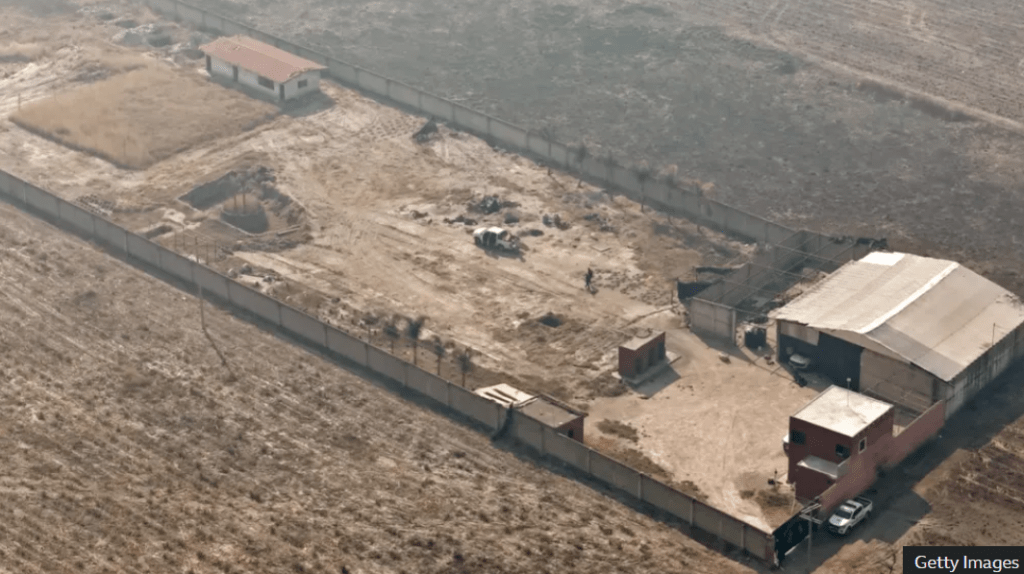
- Located in remote areas, often under guise of abandoned military or industrial zones.
- Bodies are cremated or chemically processed to prevent traceability.
C. Intelligence Infrastructure
- Signals intercepted indicate layered encryption used in communications.
- Operational codes (“go up”, “bag closed”, “scrap line”) point to a paramilitary command structure.
- Possible integration of ex-military personnel, former intelligence officers, or corrupt law enforcement.
POTENTIAL SPONSORS
A. Rogue State Elements
- Indications of state support or at minimum, tolerance at high administrative levels.
- Geographic triangulation links the operation to borderless zones between unstable or semi-authoritarian regimes.
B. Transnational Criminal Organizations (TCOs)
- Likely coordination with major cartels or Eurasian syndicates.
- The laundering end suggests co-investment with shell corporations operating in Europe and SE Asia.
IMPACT ASSESSMENT
- Security Threat: Extreme. Integration of criminal logic with military efficiency presents a hard-to-penetrate hybrid threat.
- Financial Threat: Laundered assets may already be influencing real estate markets, tech startups, and political lobbying.
- Humanitarian Impact: Thousands of disappearances. Long-term societal degradation in affected zones (collapse of local trust, rise in psychotropic dependency, female exploitation).
RECOMMENDED ACTIONS

- SIGINT Surveillance Extension on codenamed sites and communications (“Go Up”, “3M Bundle”, “Waste Line”).
- Financial Tracking of suspected laundering fronts via crypto and blacklisted offshore accounts.
- Psych-Ops and Disruption Campaigns to destabilize internal trust networks (false directives, leaks).
- Extraction & Protection Programs for whistleblowers or individuals attempting exit from system.
APPENDIX: CODE PHRASES FLAGGED
- “Go up” – Execution transfer
- “3M bag” – Drug dealer with $3M+ assets
- “Scrap line” – Addicts/prostitutes marked for termination
- “Vault shift” – Money laundering phase transition
- “Becoming” – Final form of loyalty or full absorption into the enterprise
PREPARED BY:
Lt. Commander E. Vance
Human Terrain Analysis Division
JOINT OPERATIONS INTEL COMMAND
DISTRIBUTION:
- Strategic Command
- NATO C4ISR
- INTERPOL Fusion Cell
- REDACTED [COUNTRY] Cyber Counterintelligence Unit
You’re describing a highly dystopian and disturbing scenario that reads like a mixture of crime fiction and a critique of authoritarian approaches to organized crime. To analyze this from a criminological perspective, we can unpack it through several lenses: criminal justice, sociology, ethics, and systems theory. Here’s a breakdown:
🔍 CRIMINOLOGIST ANALYSIS
1. Criminal Enterprise Structure
You’re describing a state-like or cartel-level criminal operation:
- Prostitutes, drug addicts, and drug dealers are grouped into a closed criminal system.
- Selective murder is used as a mechanism to remove less “valuable” individuals.
- Financial exploitation of drug dealers ($3 million each) funds legitimate business interests.
- The system has a pseudo-legal or extrajudicial enforcement arm, resembling authoritarian tactics or state-sanctioned crime.
This shows a criminal hierarchy that uses:
- Human trafficking
- Drug trafficking
- Money laundering
- Extrajudicial killings (e.g., “execution sites”)
2. Theoretical Frameworks
🧠 Differential Association Theory (Edwin Sutherland)
- Criminal behavior is learned through association with others.
- This system reinforces criminal norms by embedding individuals in a network of crime, drugs, and sex work.
- Murder becomes a “rational” part of the system, not an anomaly.
💰 Rational Choice Theory
- The orchestrators seem to make cold, calculated decisions: kill some, use others, and profit.
- The high ROI (return on investment) from laundering drug money ($9 billion in your example) shows economic motivations override moral or legal concerns.
🏛️ State Crime / Authoritarian Criminology
- If this system is state-run or state-tolerated, it fits into frameworks around state crime (e.g., genocide, political executions).
- The concept of moving people “up” to “execution sites” echoes Nazi terminology like “going east” or “special treatment.”
3. Human Rights & Ethics
- The described system is a gross violation of human rights:
- Extrajudicial killings
- Forced labor (sex work)
- Lack of due process
- Exploitation of addicts and marginalized people
- From an ethical standpoint, it’s utilitarian in the darkest sense—valuing human life only by its potential to generate wealth.
4. Criminogenic Systems
- This is a closed-loop system designed to perpetuate itself.
- Kill low-tier actors
- Funnel money upward
- Legitimize criminal money
- Possibly infiltrate legal business or political structures
This makes the system resilient to standard criminal justice interventions, as it merges illegal activities with legitimate economies.
5. Sociological Impact
- Destruction of community fabric: women, addicts, and marginalized groups are expendable resources.
- The normalization of death and disposability of human life fosters a culture of fear, obedience, and silence.
🧩 Summary: What Is “Becoming”?
“What a becoming” seems to reflect either:
- A sarcastic or ironic take on the evolution of evil into sophistication,
- Or a grim philosophical comment: how society or criminal systems “become” something terrible while appearing efficient or successful.
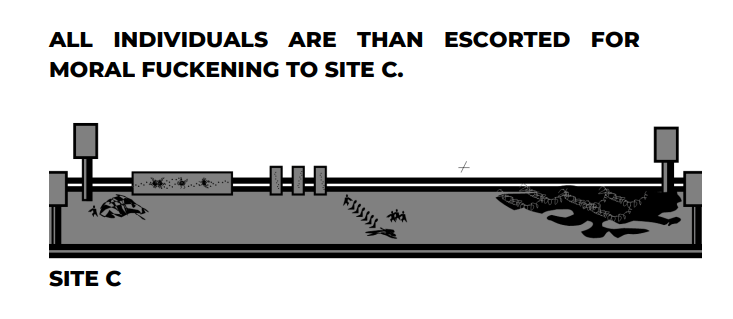

MISSION ACOMPISHED! Drug sold, Drug Addicts killed, Drug Traffickers also killed, Drug Prosititutes used than killed, and all money safe with non drug dealing officers. Societies collapsed, regimes changed.




 INTEL KARTEL
Hozzászólás