Political History and Governance
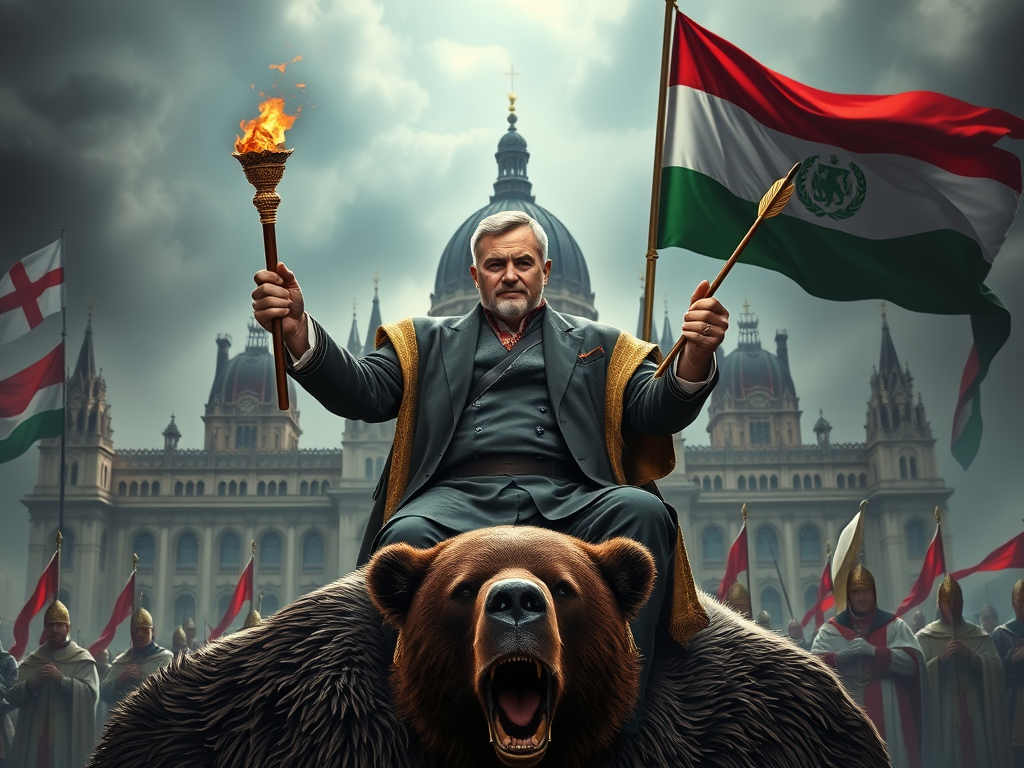
Since the end of communism Hungary has held regular multi-party elections. The first free parliamentary election (1990) returned an MDF–FKGP–KDNP coalition with József Antall (MDF) as PMen.wikipedia.org. Subsequent elections produced alternating governments: MSZP-led from 1994 (Gyula Horn) to 1998, then Fidesz-led (Viktor Orbán) 1998–2002, an MSZP-led government 2002–2010, and Fidesz–KDNP governments from 2010 onward (Orbán re-elected in 2014, 2018, 2022). In 2010 Fidesz–KDNP won 263 of 386 seats (68%)en.wikipedia.org; it preserved two-thirds majorities in 2014, 2018 and 2022 (e.g. 133/199 seats in 2018en.wikipedia.org). Viktor Orbán served as PM in 1998–2002 and again from 2010–presenten.wikipedia.orgen.wikipedia.org.
Hungary’s constitution was replaced in 2011–12. On 18 April 2011 Parliament approved the new “Fundamental Law” (promulgated by the President and effective 1 Jan 2012) – the first wholly new Hungarian constitution since 1949en.wikipedia.org. The new charter and its many amendments have been controversial (opponents cite weakened checks and a conservative ideological bent)en.wikipedia.orgen.wikipedia.org. For example, a major 2013 amendment (passed by the Fidesz supermajority) limited the Constitutional Court’s powers (prohibiting annulment of two-thirds laws) and introduced new judicial retirement rulesen.wikipedia.org. (Orbán’s government defended these changes as necessary to clarify the new constitutionen.wikipedia.org.)
Parliament remains unicameral (the Országgyűlés), and by custom executive power is with the PM. Key political events include EU accession (May 2004) and joining NATO (March 1999), reflecting Hungary’s post-1989 Westward orientation. (Recent foreign policy has also pursued ties with Eastern countries and significant international investment.)
Major Elections (Selected)
| Year | Winning Party/Coalition | Seats (total) | Notes |
|---|---|---|---|
| 1990 | MDF–FKGP–KDNP (center-right) | 164 / 386 | J. Antall PM (first free post‑communist parliament)en.wikipedia.org. |
| 1994 | MSZP–SZDSZ (center-left) | 209 / 386 | Socialist (Horn) majorityen.wikipedia.org. |
| 1998 | Fidesz–MDF–FKGP (right) | ~148 / 386 | Orbán becomes PM. Supermajority. |
| 2002 | MSZP–SZDSZ (left) | 188 / 386 | Medgyessy (later Gyurcsány) PM. |
| 2006 | MSZP–SZDSZ (left) | 210 / 386 | Gyurcsány PM (Olympics and Őszöd speech protests). |
| 2010 | Fidesz–KDNP (right) | 263 / 386 | Orbán PM. Landslide (68% of seats)en.wikipedia.org. |
| 2014 | Fidesz–KDNP (right) | 133 / 199 | Orbán PM. Two-thirds majority retaineden.wikipedia.org. |
| 2018 | Fidesz–KDNP (right) | 133 / 199 | Orbán PM (66.8% of seats)en.wikipedia.org. |
| 2022 | Fidesz–KDNP (right) | 135 / 199 | Orbán PM (supermajority). |
Sources: Official election statistics (Hungarian NVI) and inter-parliamentary dataen.wikipedia.orgen.wikipedia.orgen.wikipedia.org.
Economic Data
Hungary’s economy underwent rapid privatization in the 1990s, EU accession in 2004, and macroeconomic shocks in 2009 (GDP –6.7%) and 2020 (COVID contraction). By 2010–2019 growth averaged roughly 3–4%/yr, driven by industrial exports (autos, electronics) and EU funds. Inflation was low (single-digit) until 2021, when energy-price shocks pushed it into double digits. In recent years government policies (sector taxes, wage increases) and global conditions have affected inflation and growth.
According to Eurostat, Hungary’s GDP per capita (PPS) by 2018 was about 66% of the EU27 averageec.europa.eu, reflecting continued catch‑up. The economy is export-oriented (exports ~80% of GDP, mainly to Germany, Austria and EU partners) and has attracted substantial foreign direct investment (especially in automotive and tech sectors). Agriculture is a small share (<4% GDP), industry ~25%, services ~70%.
Key macro indicators (approximate): GDP growth averaged +3% in the 2010s; inflation ~3–4% (pre-2022); unemployment ~3–4% in late 2010s, rising slightly during crises. Public debt has hovered around 70% of GDP. (Detailed time-series data on GDP, inflation, unemployment, trade balance, investment etc. are available from Hungarian sources (KSH), Eurostat and IMF.)
Demographics
Hungary’s population has declined since 1990. Census and estimates show roughly 10.4 million in 1990, falling to 10.2M (2001), 9.94M (2011) and 9.60M (2022)en.wikipedia.org. (Eurostat estimates put January 2019 at 9.8Mec.europa.eu, and 2025 at ~9.66Mdatareportal.com.) Population density is ~105 people/km². The population is aging: low birth-rates and rising life expectancy (around 76 years in 2022macrotrends.net) mean a high median age (~43) and increasing old-age dependency (over 30%). Urbanization is high (~73% urbandatareportal.com), with Budapest the largest city (~1.7M metro). Net migration was negative in the 1990s–2000s, but in the 2010s EU labor mobility partly offset natural decline.
Ethnic composition (2011 census): about 93.5% Hungarian (Magyar)en.wikipedia.org. Largest minorities include Roma (~3.2%), Germans (~1.9%), and Romanians and Slovaks (each ~0.4%)en.wikipedia.org. Other ethnicities (Croat, Serb, Slovene, Ukrainian, Romanian, etc.) each comprise much smaller shares (<0.5%). The Hungarian language is the official mother tongue; “more than nine-tenths of the population is ethnically Hungarian and speaks Hungarian”en.wikipedia.org. Several minority languages (e.g. Roma, German, Slovak) have cultural recognition.
Religion (2022 census): Hungary is traditionally Christian. By 2022 about 30% of the population identified as Catholic (mostly Roman Catholic, 28.3%; Greek Catholic 1.7%), 11.6% as Protestant (9.8% Calvinist, 1.8% Lutheran), and 0.2% Orthodox Christianen.wikipedia.org. Jews comprise ~0.1%. Other religions (e.g. Islam, Eastern faiths, folk) total ~1.8%. A large share – 16.2% – reported no religious affiliation, and 40.1% did not answer this census questionen.wikipedia.orgen.wikipedia.org. (By comparison, the 2011 census had shown ~52.9% Christian, ~27% non-religious/atheist, ~18% undeclared.)
Table 1. Population of Hungary (millions)
| Year | Population | Source |
|---|---|---|
| 1990 | 10.37 | Census (present-day Hungary)en.wikipedia.org |
| 2001 | 10.20 | Censusen.wikipedia.org |
| 2011 | 9.94 | Censusen.wikipedia.org |
| 2022 | 9.60 | Censusen.wikipedia.org |
| 2025 | 9.66 (est.) | DataReportal (Jan 2025)datareportal.com |
Table 2. Ethnic groups (2011 census)
| Ethnic Group | Share of Population | Sourceen.wikipedia.org |
|---|---|---|
| Hungarian | 93.5% | en.wikipedia.org |
| Roma (Gypsy) | 3.2% | en.wikipedia.org |
| German | 1.9% | en.wikipedia.org |
| Romanian | 0.4% | en.wikipedia.org |
| Slovak | 0.4% | en.wikipedia.org |
| Other (incl. Croat, Serb, etc.) | 0.6% | en.wikipedia.org |
Table 3. Religion (2022 census)
| Religion | Share of Total (of 9.60 M) | Sourceen.wikipedia.orgen.wikipedia.org |
|---|---|---|
| Catholic (total) | 30.0% (2.886 M) | en.wikipedia.org |
| • Roman Catholic | 28.3% | en.wikipedia.org |
| • Greek Catholic | 1.7% | en.wikipedia.org |
| Protestant (total) | 11.6% (1.120 M) | en.wikipedia.org |
| • Calvinist (Reformed) | 9.8% | en.wikipedia.org |
| • Lutheran | 1.8% | en.wikipedia.org |
| Orthodox | 0.2% | en.wikipedia.org |
| Judaism | 0.1% | en.wikipedia.org |
| Other religions | 1.8% | en.wikipedia.org |
| No religion | 16.2% | en.wikipedia.org |
| Not stated | 40.1% | en.wikipedia.org |
| Total | 100.0% |
Cultural Developments
Hungarian is the official language (a Uralic language unrelated to most neighbors) and is spoken by virtually all native Hungariansen.wikipedia.org. Minority communities often also use their heritage languages (e.g. German in Baranya/Budapest, Slovak, Romani, etc.). Hungary has a rich cultural heritage (world-famous composers, writers, and UNESCO World Heritage sites like Budapest’s Castle District, Hortobágy Puszta, and Pannonhalma Archabbey). Religious affiliation has declined over time, and church attendance is low despite a large nominal Christian population. According to polls, under 15% attend weekly religious services and about 30% are irreligiousen.wikipedia.org.
Major national cultural events include the Budapest Spring Festival (arts), Sziget Festival (music), and numerous folk traditions. Education and media reforms (e.g. 2010s centralization of schools, creation of the National Media Council in 2010) have also shaped Hungary’s cultural landscape.
Technology
Hungary has high digital connectivity. By early 2025 there were about 9.09 million Internet users in a population of ~9.66M, i.e. 94.1% penetrationdatareportal.com. Mobile phone use is ubiquitous (117% mobile subscriptions per capitadatareportal.com). Broadband internet access is widespread in cities and growing in rural areas. ICT investment has been strong: R&D spending has risen (though still around 1.4–1.6% of GDP, below EU average). Hungary has a growing tech startup scene (particularly in Budapest), supported by EU funds and domestic innovation grants. High-tech exports (pharmaceuticals, software, electronics) account for a significant share of industrial output.
Environment
Hungary has a temperate continental climate: hot summers, cold winters. Environmental issues include air pollution (industrial and vehicle emissions in urban centers), and management of the Danube-Tisza watershed. As an EU member, Hungary adheres to EU climate targets and seeks to increase renewable energy. Energy: Hungary’s electricity mix is ~50% nuclear (Paks plant), ~30% gas/coal, ~10% renewables (wind, solar, biomass) and the rest imports. The government aims for >20% renewables by 2030. Per capita CO₂ emissions have been around 6–7 tonnes/year. Air quality data (PM10, PM2.5) show improvements in recent decades but some exceedances in winter. Hungary participates in international environmental agreements (Kyoto, Paris Climate, biodiversity conventions).
Military
Hungary joined NATO in March 1999 and the EU in May 2004, solidifying its post‑Cold War alignment. The Hungarian Defence Forces are modest in size (roughly 23,000 active personnel around 2020, plus reserves). Defense spending has been rising: it was near the NATO guideline of 2% of GDP by the early 2020s. Hungary contributes forces to NATO and EU missions (e.g. KFOR in Kosovo, UN peacekeeping). Major military equipment includes Leopard tanks, Gripen fighters, and domestically produced small arms. (Defence procurement and budgeting are set by the Ministry of Defence; recent years have seen modernization programs for air defense and cyber.)
Education
Hungary has a highly educated population. Literacy is virtually 100%. Primary and secondary education is universal (compulsory through age 16). Tertiary enrollment is high: over 50% of the 25–34 age cohort holds a higher education degree (above the EU average). Key reforms include the 2011-centralization of all schools under state authority (abolishing local governance) and the 2012 “Campus Hungary” program to internationalize universities. International PISA scores (OECD tests) for Hungarian students are slightly below the OECD average but improving. Government education spending is about 4–5% of GDP.
Healthcare
Hungary has a universal health care system (National Health Insurance Fund), financed by payroll taxes and government subsidy (total health expenditure ~7–8% of GDP). Life expectancy at birth has risen from ~70 (1990) to about 76.0 years by 2022macrotrends.net (men ~72, women ~79). Infant mortality has fallen to around 4 per 1000 births. Leading health issues include cardiovascular disease (highest mortality in the EU), cancer, and diabetes. Preventive care and healthy lifestyles are policy focuses (e.g. “public health product tax” on high-sugar/fat foods since 2011). Major reforms in the 2000s (e.g. creating a single-payer fund in 2007) have been controversial, but coverage remains high and vaccination rates (e.g. 99% for measles) are among the EU’s best.
International Relations
Hungary joined NATO (1999) and the EU (2004) and is part of the Schengen Area (since 2007). It is a member of the UN, OECD (since 1996), OECD, World Trade Organization (1995) and regional bodies like the Visegrád Group. Hungarian foreign policy is officially Atlanticist, and Hungary participates in EU and NATO common policies. Since 2010, government policy has emphasized national sovereignty within the EU and has cultivated closer ties with non-Western partners (e.g. China’s Belt and Road, Russia) while maintaining alliance commitments. Internationally, Hungary contributes to EU integration (e.g. euro area, Schengen) and advocates for regional concerns (e.g. supporting Hungary’s large diaspora in neighboring states).
Sources: Official statistics (Hungarian Central Statistical Office, election office), international databases (Eurostat, World Bank, OECD), and academic/NGO reports. Selected data are cited aboveen.wikipedia.orgen.wikipedia.orgen.wikipedia.orgen.wikipedia.orgen.wikipedia.orgen.wikipedia.orgdatareportal.commacrotrends.net. (This report synthesizes the period 1989–2025 across multiple domains for Hungary.)

 INTEL KARTEL
Hozzászólás