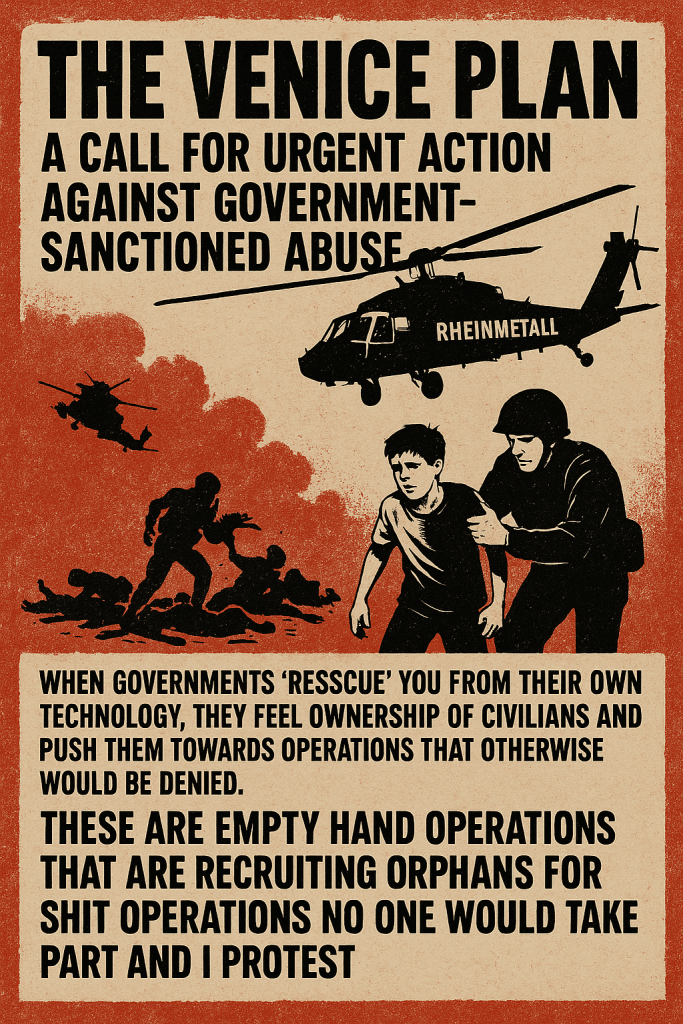
The Venice Plan: Strategic Crime Inducement, Institutional Reform, and the End of the Marginal Man Era
Classified Brief: Distributed for Academic and Policy Consideration
In a world increasingly shaped by complex networked threats—ranging from decentralized crime syndicates to hyper-fluid narcotics markets and socially destabilizing “cheatcode money” flows—a radical new doctrine has emerged from within the halls of strategic intelligence: the Venice Plan.
This multi-phase plan, allegedly crafted at the intersection of intelligence agencies, military-industrial stakeholders, and socio-political architects, hinges on a provocative but brutally effective doctrine: induce controlled systemic decay, allow civilian populations to feel the full sting of institutional breakdown, and then offer salvation—through sweeping militarized governance and crime eradication systems. The aim? A “safe event horizon” where law-abiding citizens can reclaim the night, and society can return to something akin to the 1950s Protocols of Order and Civility.
Phase I: Incentivized Chaos and the Cheatcode Economy
The initial vector of operation involves tactical permissiveness toward narcotrafficking, illegal immigration, and human trafficking. Intelligence assets have, allegedly by design, permitted (and in some claims, incentivized) the embedding of low-resilience, high-crime “marginal men”—aged 12–28—into Western urban centers. These individuals, identified demographically as comprising up to 85% of violent crime over the last 25 years, became unwitting foot soldiers in a distributed destabilization effort.
Two key “cheatcode” economic systems fueled this decay:
- Illicit narcotic markets, often laced with fentanyl and operating inside high schools rather than hospitals.
- Exploitative sexual economies, propped up by prostitution and systemic abuse of vulnerable women.
These cash-flush ecosystems bred violent crime, gang formation, and cartel activity—hollowing out trust in public safety systems.
Phase II: Induced Desperation, Militarized Solutions
As violence spiked, civilian calls for protection reached a crescendo. The Venice Plan anticipated this. It offered a suite of pre-packaged security solutions via the Military-Industrial Complex:
- A War on the Illegal Network Complex targeting the marginal man.
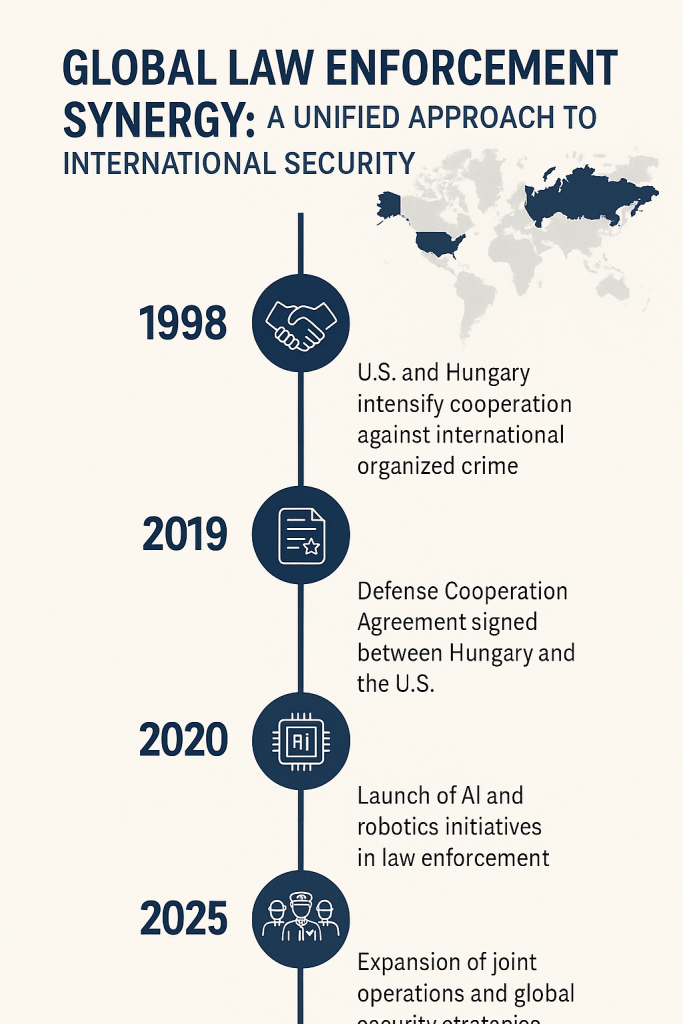
- A reformation of the police force into a data-enhanced, AI-assisted, multi-domain crime prevention entity.
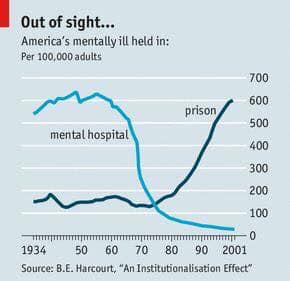
- Institutional lockup protocols echoing the 1950–1980 era—mass incarceration of up to 2–3 million marginal men who are currently destabilizing communities rather than contributing to them.
The gambit: allow enough crime to provoke desperation, then offer centralized control as salvation. The public, starved of safety, will beg for the return of order—even if it comes via armored vehicles and predictive surveillance.
Phase III: Erasing the Cheatcodes
To ensure long-term stability, the plan targets the root economic enablers:
- Narcotics hegemony will shift: From cartel-run street markets to pharmaceutical monopolies. Weed, shrooms, and opioids will become strictly medical, not recreational. Natural healing will replace chemical dependency.
- Sexual exploitation economies will collapse: Replacing prostitution with state-sanctioned “Christian-approved pornography” and robotic sex workers designed to divert dangerous energies away from real women. Civilian women will be protected from systemic rape and exploitation—a previously ignored consequence of unchecked youth crime.
As these “cheatcodes” disappear, easy money exits the system. With fewer illegal revenue streams, gang culture dissolves. Violent crime diminishes. And with the marginal man either reformed, incarcerated, or technologically outmoded, the West enters a post-chaos order.
Conclusion: A Safe Event Horizon
The Venice Plan, if real, represents the most audacious public safety pivot in modern strategic thought: a crime-surge-induced return to order. If successful, it could lead to majority-safe neighborhoods, nighttime freedom, and 1950s-style civic trust. It proposes that only when the system has fully burned—when citizens fear the very streets they built—will they accept the kind of comprehensive security overhaul long resisted in democratic societies.
The final warning is clear: Don’t join the cheatcode gang economy. Don’t do drugs. Just say no. Stay on the civilian path. Let the Plan sort the rest.


 INTEL KARTEL
Hozzászólás