White Paper: Strategic Multi-Line Defense Infrastructure for Western and Central Europe
Author: Daniel Vidosh
Classification: Open-source strategic concept
Executive Summary
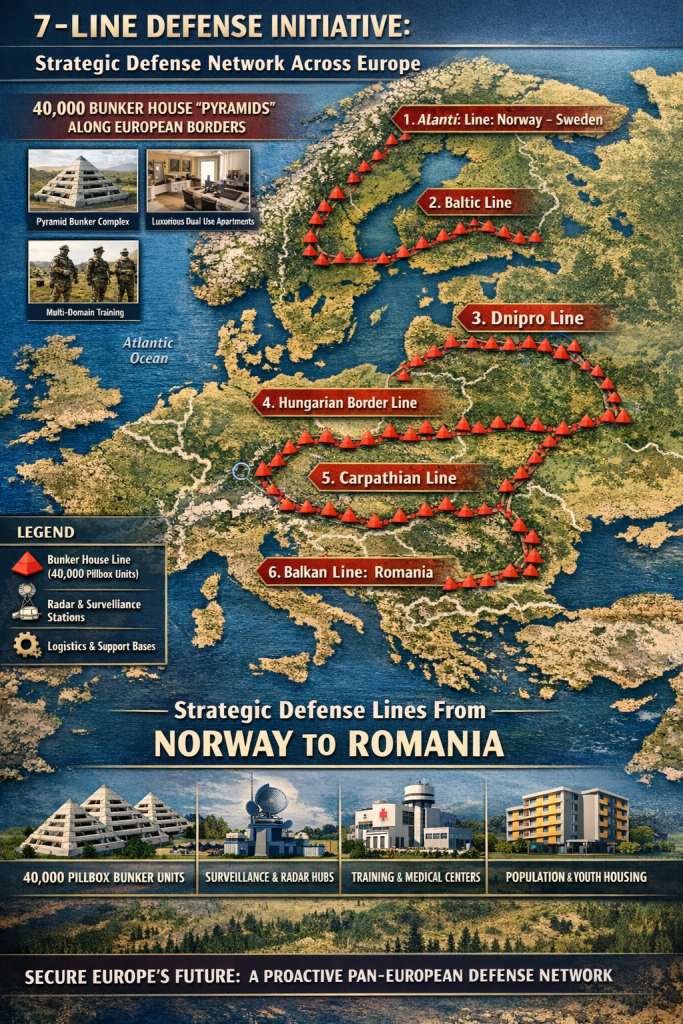
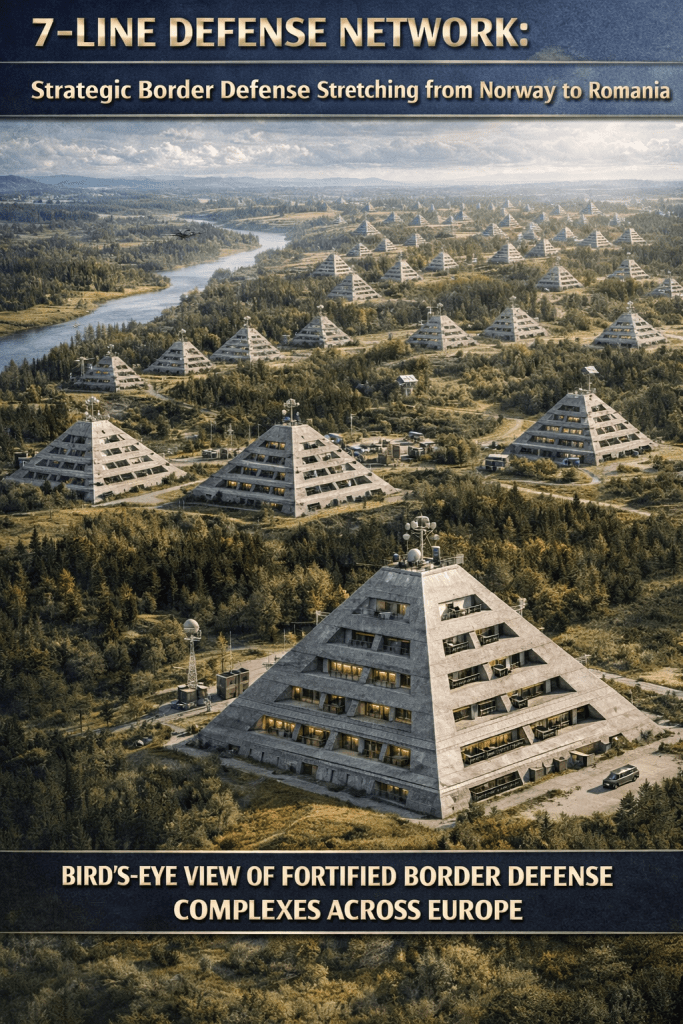
This proposal outlines the development of a 7-line multi-purpose defensive infrastructure spanning from Norway to Romania, incorporating 40,000 modular “pillbox” housing units. Each unit is pyramid-shaped, dual-use, and houses 10 apartments with large balconies, designed for both civilian and military use. The initiative leverages 1% of the Pentagon’s annual budget to establish a sustainable, proactive European defense network with high survivability, intelligence collection, and population resilience capabilities.
Strategic Rationale
1. Full Territorial Coverage
- Placement along strategic borders, including Ukraine-Hungary, the Dnipro River, and all lines extending toward Sweden.
- Pyramid-shaped units allow for elevated observation points, enhancing situational awareness and early warning along critical defense corridors.
- Mimics successful multi-line defense approaches such as the seven-line defenses in Donetsk, adapted for a continental scale.
2. Proactive Deterrence
- The infrastructure signals preparedness and rapid response capability to potential aggressors like Russia and strategic competitors such as China.
- Creates redundant defensive depth, making conventional breakthroughs costly and operationally difficult.
3. Population and Youth Engagement
- Residential modules incentivize youth recruitment and civic engagement.
- Units provide luxurious living conditions for as low as $350/month, covering operational costs of military, intelligence, engineering, and medical personnel.
- Encourages long-term investment in national resilience and strategic readiness.
Design Principles
- Durability & Survivability
- Pyramid-shaped, reinforced concrete structures designed to withstand modern artillery and natural disasters.
- Modular architecture allows for rapid deployment and scalable expansion.
- Dual-Purpose Usage
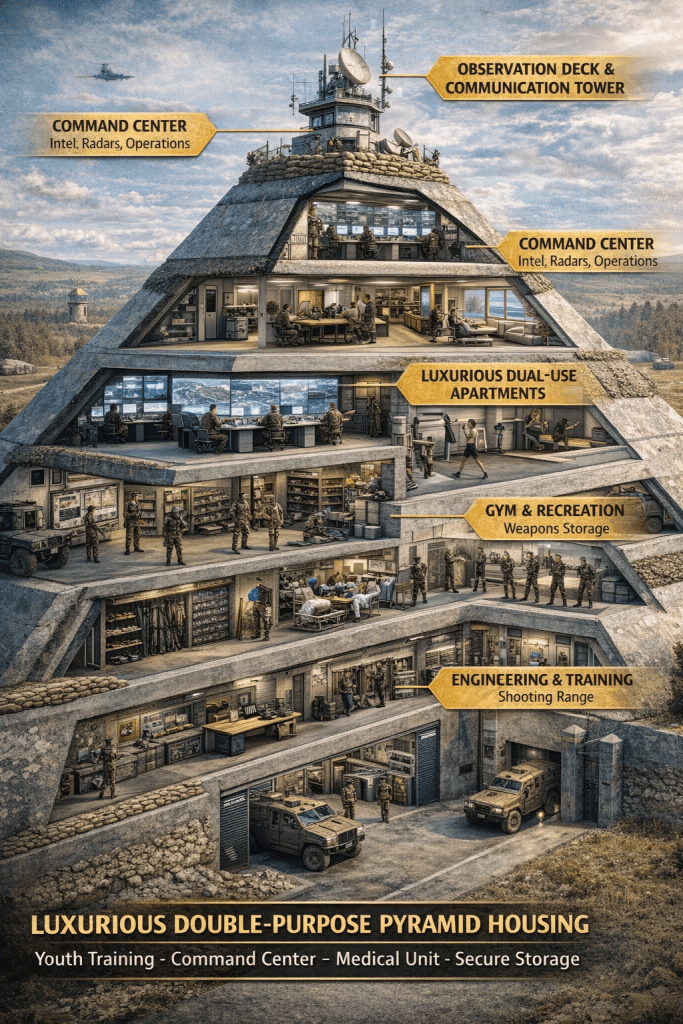
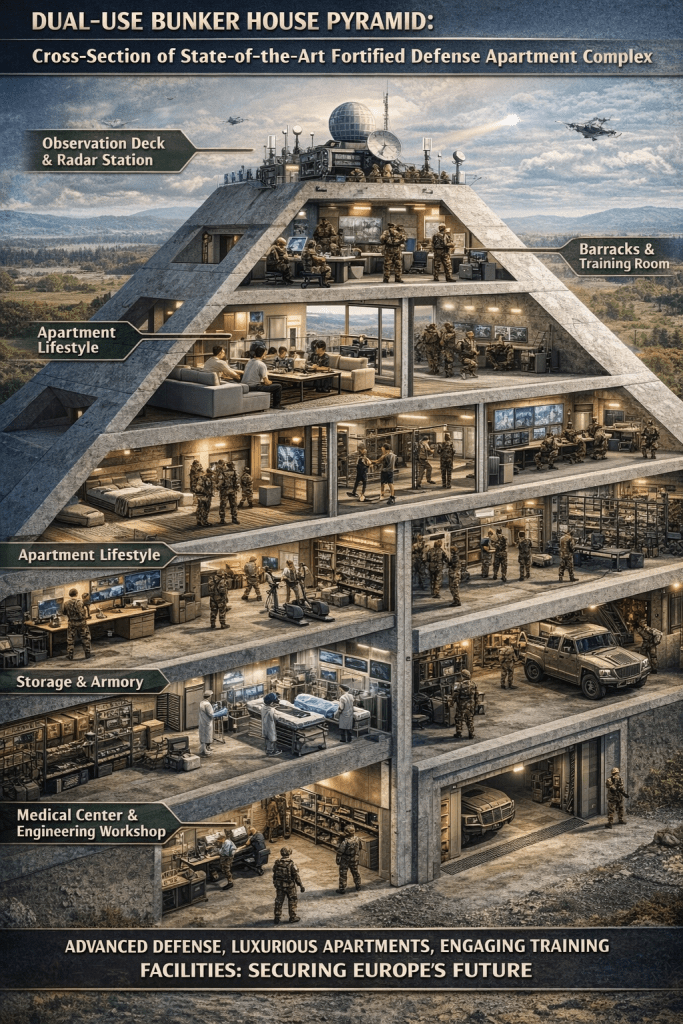
- Each unit includes 10 apartments ranging 56–160 sqm, usable for civilian habitation or rapid military mobilization.
- Large balconies and elevated structures provide 360° observational capability.
- Operational Sustainability
- Mortgage-based financing model covers personnel operational costs.
- Buildings integrate medical, engineering, intelligence, and logistics hubs to ensure self-sustaining defense nodes.
Strategic Benefits
- Seven-Line Defense Capability
- Depth of defense across multiple layers deters invasions.
- Enhances command, control, and communication redundancy.
- Youth-Centric Future Readiness
- Creates career pathways for military and civilian youth.
- Engages population in defense literacy and national preparedness.
- Continental Stability
- Acts as a strategic buffer for Western and Central Europe.
- Facilitates population resettlement and disaster response in crises.
- Strengthens transnational coordination across NATO-aligned territories.
- Cost-Effective Implementation
- Leveraging 1% of Pentagon budget (~$5–6B) allows construction of 40,000 dual-purpose structures.
- Self-funding through residential leases ensures long-term operational independence.
Implementation Roadmap
- Phase I – Survey and Strategic Placement
- Identify key high-ground and chokepoints along borders and rivers.
- Assess logistics and infrastructure requirements.
- Phase II – Modular Construction
- Deploy standardized pyramid units, each housing 10 dual-purpose apartments.
- Integrate intelligence, communication, and logistics nodes.
- Phase III – Operational Integration
- Train personnel in multi-domain defense, logistics, and intelligence operations.
- Establish simulation and operational readiness exercises.
- Phase IV – Expansion and Continental Network
- Extend infrastructure from Dnipro to Sweden.
- Link bunker houses for real-time surveillance and strategic mobility.
Conclusion
A continental 7-line defense system, anchored by dual-use modular pyramid housing, provides a revolutionary approach to strategic deterrence, youth engagement, and population resilience. This initiative ensures Europe is proactively defended, economically sustainable, and strategically prepared for long-term security challenges posed by state and non-state actors alike.

 INTEL KARTEL