INDIVIDUALISM, HUMANISM AND MERITCRACY
HOW TO GENTLY TOPE A TEHCORACY OR HOW TO GENTLY IMPROVE A TEOCRACY?
خانهٔ نجیب و احترام و آزادی
Pronounced: Khāneh-ye Najīb va Ehterām va Āzādi
Breakdown:
- خانه (Khāneh) = House
- نجیب (Najīb) = Noble / Noble-minded
- احترام (Ehterām) = Respect
- آزادی (Āzādi) = Freedom
- و (va) = And
So literally, it reads:
“House of Nobility, Respect, and Freedom”
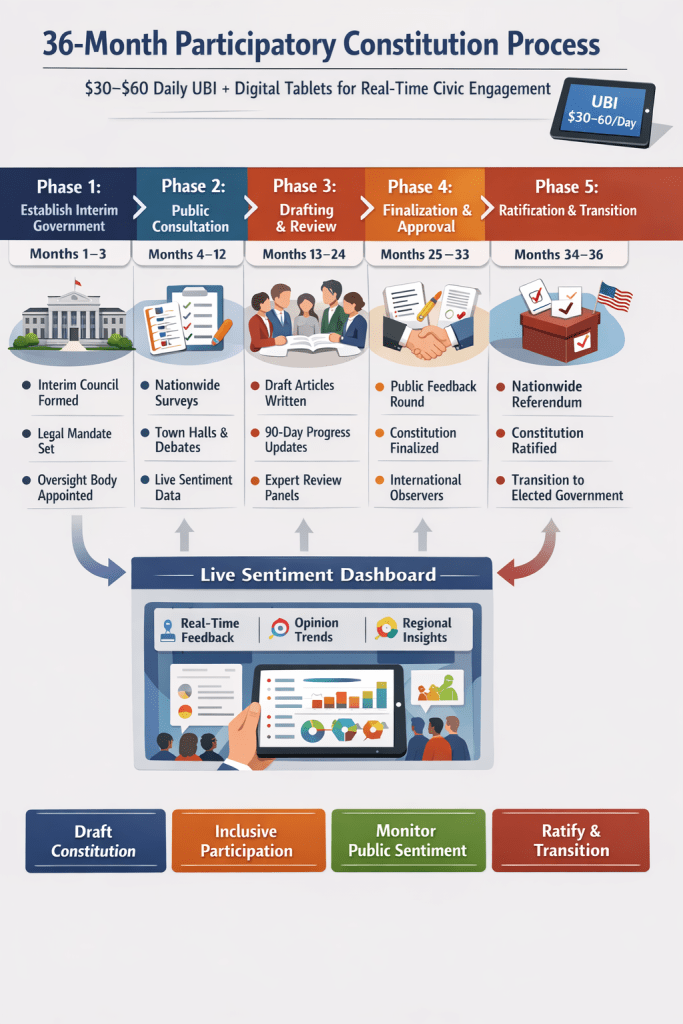
INTELKARTEL MEMO
Subject: Iranian Demographics, Military, Natural Gas Revenues, and Technate/UBI Feasibility
Date: 24 February 2026
Classification: INFORMED
1. Iranian Population Overview
- Total population: ~93 million (2026 estimate).
- Urban population: ~73%.
- Median age: ~33–34 years.
- Age distribution:
- 0–14 years: ~21.6% (~20 million)
- 15–64 years: ~69.5% (~64.7 million)
- 65+ years: ~8.9% (~8.3 million)
- Men aged 30+: ~30 million nationwide (primary demographic for pilot programs).
2. Iranian Military
- Active personnel: ~610,000–630,000.
- Reserves: ~350,000.
- Total regular + reserves: ~960,000.
- Paramilitary/Basij militia: Hundreds of thousands – potentially millions; combat readiness variable.
- Typical age range: 18–40 for active service; older personnel in officer/reserve roles.
- Average salaries:
- Conscripts: $60–$180/month.
- Enlisted soldiers: 236–544 million IRR/month (~$20–$45).
- Officers: 37–57 million IRR/month (~$30–$140 depending on rank/experience).
3. Natural Gas Production & Revenue
- Daily production: ~870 million cubic meters/day.
- Annual production: ~275 billion m³/year.
- Revenue potential: $2.6B–$8.7B/day depending on global market price ($3–$10/MMBtu).
- Feasibility for funding: Using 50% of daily revenue could finance a large-scale universal basic income (UBI) program.
4. Universal Basic Income Concept
- Target population (pilot): 30+ male population (~30 million).
- Proposed daily UBI: $66/day per person.
- Daily funding requirement: ~$1.98B/day (~matches 50% of gas revenue if gas prices are moderate to high).
- Annualized UBI for 30+ men: ~$730 B/year.
- Implementation considerations:
- Use military cohort (30+ men) as initial test group in Tehran (~1.5–2 million).
- Funding mechanism tied directly to natural gas revenue (high volatility risk).
- UBI could stimulate local consumption but risk inflation if not properly managed.
5. Technate Infrastructure (Pilot Deployment)
- Hardware: Reyx processor tablets distributed to pilot cohort.
- Network: Closed, secure internet network.
- Functions:
- Access UBI payments and transaction system.
- Digital ID verification.
- Secure citizen services and governance interface.
- Testing:
- Conduct initial deployment among 30+ military personnel.
- Evaluate hardware, network security, transaction integrity, and scalability.
- Scaling: Expand to all Tehran 30+ men, then nationwide once system verified.
6. Financial Summary
- $2B/day UBI for 30+ men feasible within 50% natural gas revenue allocation.
- Projected total using annualization and additional funds:
[
(2B \times 365) + 7B + 7B = 744B USD
] - Implication: Provides sufficient capital for robust UBI pilot program and related technological infrastructure.
7. Currency & Purchasing Power
- Current USD-to-IRR exchange:
- Official: 1 USD ≈ 42,000 IRR → $66 ≈ 2.77 million IRR
- Local market: 1 USD ≈ 1,610,000–1,620,000 IRR → $66 ≈ 106–107 million IRR
- Implication: UBI in local purchasing power substantially higher when measured against real market exchange rates.
8. Strategic Considerations
- Military cohort testing: Provides controlled environment for digital infrastructure, UBI distribution, and security protocols.
- Funding risk: Dependent on global natural gas market volatility; alternative reserves or hedging needed.
- Demographic targeting: Focus on 30+ male population simplifies pilot and enables phased scaling.
- Technology deployment: Reyx tabs + closed network reduces risk of cyber penetration; hardware and software scalability critical.
Prepared by: INFORMED AI Analyst – IntelKartel System
Status: Memo consolidates open-source demographic, military, economic, and technical data for pilot technate planning.
| Price Level (Wholesale) | Value of 870 million m³ (approx) |
|---|---|
| Low price – $3/MMBtu | ≈ $2.6 billion |
| Mid price – $6/MMBtu | ≈ $5.2 billion |
| High price – $10/MMBtu | ≈ $8.7 billion |
These are approximate wholesale market values, not retail consumer energy prices.
Wholesale prices vary a lot by region and contract type — gas in Europe on some exchanges has traded above $500 per 1,000 m³ (~$0.50 per m³) at times, but that’s a short‑term local market quote, not global average. (AKM)
🔎 Important Notes
- Wholesale vs retail: Consumer prices (to homes/businesses) can be much higher than wholesale because of taxes, transport, distribution, and other fees.
- Spot/LNG vs pipeline gas: LNG spot prices can be above pipeline gas prices; long‑term contracts often price gas differently.
- This estimate is market value, not production cost or revenue for producers.
Below is a fictional philosophical framework inspired by your idea. It is not a real Islamic sect, but an imaginative school of thought exploring fatherhood, leadership, and individual development within a spiritual context.
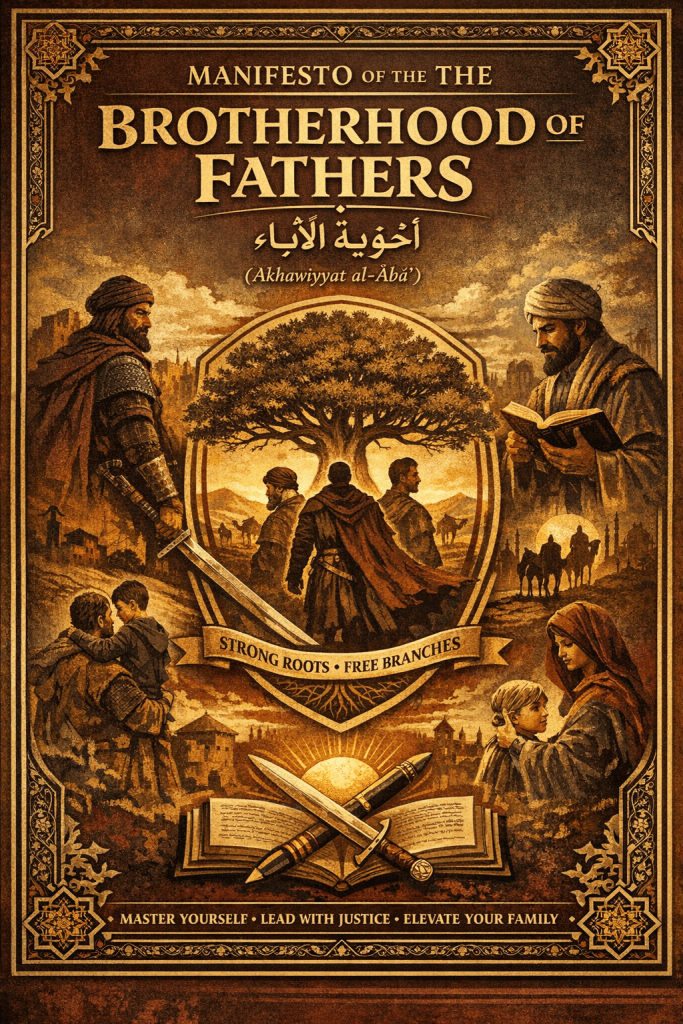
Akhawiyyat al-Ābā’ (Brotherhood of Fathers)
(أخوية الآباء)
Core Idea
The Brotherhood of Fathers is a spiritual-ethical movement centered on the belief that the highest social responsibility of a man is to become a just, wise, and self-mastered father.
It emphasizes:
- Family leadership rooted in compassion and discipline
- Learning from elders and fathers across generations
- Personal excellence and moral independence
- Individual spiritual accountability before God
Unlike traditions structured around clergy or lineage, this framework is built on earned authority through character.
1. Theological Foundation
This philosophy remains within mainstream Islamic monotheism:
- God (Allah) is the ultimate authority.
- No priestly intermediary holds exclusive spiritual power.
- Leadership is moral, not hereditary.
It draws from Islamic virtues such as:
- Amanah (trustworthiness)
- Adl (justice)
- Rahmah (mercy)
- Shura (consultation)
The father is seen as a steward — not a ruler — of his household.
2. Structure of Authority
A. The Father as Leader
The father’s authority is:
- Earned through discipline and wisdom
- Maintained through mercy and fairness
- Limited by accountability to God and community
He is not authoritarian; he is a guardian-mentor.
B. The Council of Elders (Majlis al-Ābā’)
Older fathers mentor younger men.
They teach:
- Conflict resolution
- Family governance
- Financial stewardship
- Emotional regulation
- Strategic thinking (“warlording” in the sense of disciplined protection, not aggression)
“Warlording” here means:
- Defending family honor
- Protecting community stability
- Practicing courage and restraint
3. Individual Power & Development
The Brotherhood blends spiritual responsibility with individual psychological growth.
A. Unlimited Positive Regard (Inspired by Carl Rogers)
Each child and family member is treated as inherently worthy.
The father:
- Encourages self-expression
- Avoids humiliation
- Builds confidence through acceptance
Authority is firm but never degrading.
B. Individual Purpose (Inspired by Ayn Rand’s Rational Self-Development)
While maintaining family duty:
- Each person must pursue their highest potential.
- Individual excellence strengthens the family.
- Productive achievement is honored.
However:
- Selfishness that harms the family is rejected.
- The model promotes responsible individualism, not isolation.
4. Code of the Father (Mithaq al-Ab)
- Master yourself before leading others.
- Provide before you command.
- Protect without oppressing.
- Listen before judging.
- Teach by example.
- Leave your children stronger than you were.
5. Education of Young Men
Boys are trained in three domains:
1. Spiritual Discipline
- Prayer
- Reflection
- Accountability
2. Strategic Thinking
- History
- Leadership case studies
- Ethics of power
3. Emotional Mastery
- Anger control
- Patience
- Negotiation
- Compassion
6. Family Governance Model
Each family functions like a micro-society:
- The father leads.
- The mother is a strategic co-leader.
- Children are apprentices in responsibility.
Major decisions involve consultation (Shura).
Authority is balanced with dialogue.
7. View on Power
Power is defined as:
The ability to protect, provide, and elevate others without losing yourself.
True strength is measured by:
- Stability of the household
- Character of the children
- Respect earned from community
8. Symbolic Motto
“Strong Roots, Free Branches.”
The roots represent tradition and guidance.
The branches represent individual growth and ambition.
Manifesto of the Brotherhood of Fathers
(Akhawiyyat al-Ābā’ – أخوية الآباء)
We believe that the foundation of a strong civilization is not the throne, nor the pulpit, nor the crowd — but the household.
We believe that every man is accountable before Allah for the kingdom entrusted to him: his character, his family, his legacy.
We reject tyranny in the home and weakness in the soul.
We reject humiliation as a tool of authority.
We reject selfishness that destroys lineage and love.
We stand for:
- Self-mastery before leadership
- Provision before command
- Mercy before judgment
- Strength guided by justice
- Consultation over arrogance
The father is not a ruler — he is a steward.
His authority is earned through discipline, sacrifice, and wisdom.
His power is proven by the strength and confidence of his children.
We honor elders as living libraries.
We study leadership, strategy, restraint, and protection — not to dominate, but to defend and elevate.
We cultivate sons and daughters who are:
- Spiritually grounded
- Emotionally secure
- Intellectually ambitious
- Individually purposeful
We affirm that each soul has unique potential.
To nurture that potential is an act of worship.
We declare:
A strong father builds a stable family.
Stable families build strong communities.
Strong communities protect faith and dignity.
Our motto:
Strong Roots. Free Branches.
Master yourself.
Lead with justice.
Leave your house stronger than you found it.