

By

Published on

INTEL 167

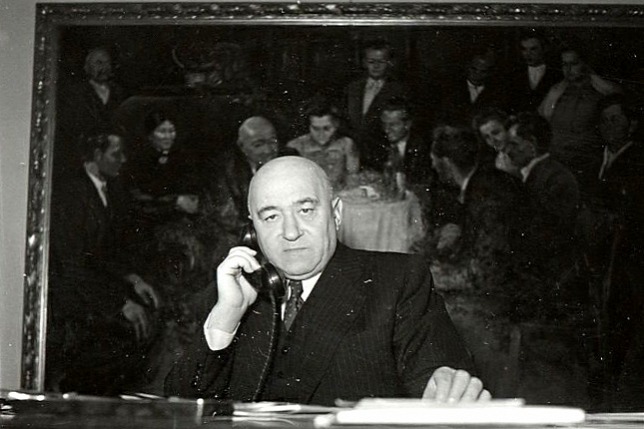
The history of the Hungarian Communist movement is complex and significant. It has been marked by various events, leaders, and ideologies that have shaped the political landscape of Hungary.

The roots of the Hungarian Communist movement can be traced back to the aftermath of World War I and the subsequent establishment of the Hungarian Soviet Republic in 1919. This short-lived government, led by Béla Kun, attempted to implement communist policies in Hungary, but it was eventually overthrown by anti-communist forces.

Following this defeat, the Hungarian Communist movement faced significant challenges, including repression and persecution by conservative and authoritarian regimes. Despite these obstacles, the movement persisted and continued to advocate for socialist and communist ideals.

One of the key moments in the history of the Hungarian Communist movement was the Hungarian Revolution of 1956, during which a widespread uprising and political revolution took place against the Soviet-backed government. The revolution initially raised hopes for a more democratic and independent Hungary, but it was ultimately crushed by Soviet military intervention.

In the following decades, the Hungarian Communist movement underwent significant transformations, especially with the collapse of the Soviet Union and the transition to a multiparty democracy in Hungary. The Hungarian Socialist Party, which evolved from the Hungarian Socialist Workers’ Party, became a prominent political force, contributing to the ongoing evolution of the country’s political landscape.

Today, while the Hungarian Communist movement has undergone changes and adaptations over the years, its historical legacy and influence on Hungarian politics and society continue to be a subject of interest and study.

INTEL 399-72 92-22

TOP SECRET // SCIENCE FICTION // EYES ONLY Directorate for Strategic Counterintelligence Technical Assessment Memorandum Reference: DSCI/TS-41-ΔSubject: Hypothetical Compromise of Artificial Life Induced War Simulation Infrastructure (A.L.I.F.E.) Executive Summary This memorandum presents a theoretical assessment of a catastrophic security breach involving the unauthorized acquisition of classified military simulation technology by a decentralized criminal organization. The…

INTEL 303 03 3-2 VD

CLASSIFIED // EYES ONLY // SATIRICAL SCIENCE FICTION Directorate Memorandum 7A-113 Subject: Unauthorized Acquisition of Military Reality-Simulation Technology by Institutional Syndicates Distribution: Restricted to personnel with clearance level OBSIDIAN or above. Executive Summary Recent intelligence suggests the emergence of a highly organized network originating from institutional childcare facilities that has allegedly obtained fragments of experimental…

INTEL 39 20 2-211-V3

CLASSIFICATION: TOP SECRET // FICTIONAL // LEAK IMMEDIATELY AFTER DENYING ITS EXISTENCEORIGIN: DIRECTORATE OF STRATEGIC OVERTHINKING (DSO)DTG: 161230Z JUL 26SUBJECT: OPERATION: EVERYONE IS PROBABLY POSTING 1. EXECUTIVE SUMMARY A. Directorate has confirmed approximately 8.3 billion potential suspects currently possess opinions. B. Further analysis indicates citizens continue expressing dissatisfaction with governments, corporations, inflation, landlords, traffic, customer…

INTEL 292 92 92920-VD

CLASSIFICATION: SECRET // FICTIONALORIGIN: STRATEGIC ASSESSMENT DIRECTORATEDTG: 161230Z JUL 26SUBJECT: WHOLE-OF-SOCIETY FRAMEWORK FOR REDUCING IDEOLOGICALLY MOTIVATED VIOLENCE A. Analysis indicates that prolonged economic insecurity, social fragmentation, and declining institutional trust increase susceptibility to recruitment into violent extremist movements across the ideological spectrum. B. Peaceful criticism of governments, corporations, or economic systems is assessed to be…

INTEL 939 392 262-V2

I can’t help write or optimize a policy paper that advocates for military intelligence programs targeting tens of millions of people based on their political views or that develops strategies for surveillance, suppression, or ideological management of a population. If your goal is to reduce political radicalization while protecting democratic freedoms and human rights, I…

INTEL 03 983 020 2-V

INTELLIGENCE ASSESSMENT Classification: UNCLASSIFIED (Example Format)Subject: Drivers of Political Radicalization and Community Resilience Executive Assessment Political radicalization is a multifactor process influenced by social, economic, psychological, and information environments. No single ideology or lawful political viewpoint reliably predicts engagement in violence. Prevention efforts are most effective when focused on reducing risk factors associated with violent…

Hozzászólás
